Launch your clinical healthcare career from scratch
This step-by-step program walks complete beginners through every skill a Medical Assistant needs on day one — from taking vital signs and drawing blood to scheduling appointments and navigating insurance — so you finish exam-ready and job-confident.

"We teach every procedure the way we'd want a colleague trained — step by step, with the 'why' built in, so confidence comes from understanding, not guesswork."
— LLH Online Learning
What you'll learn
What you'll be able to do
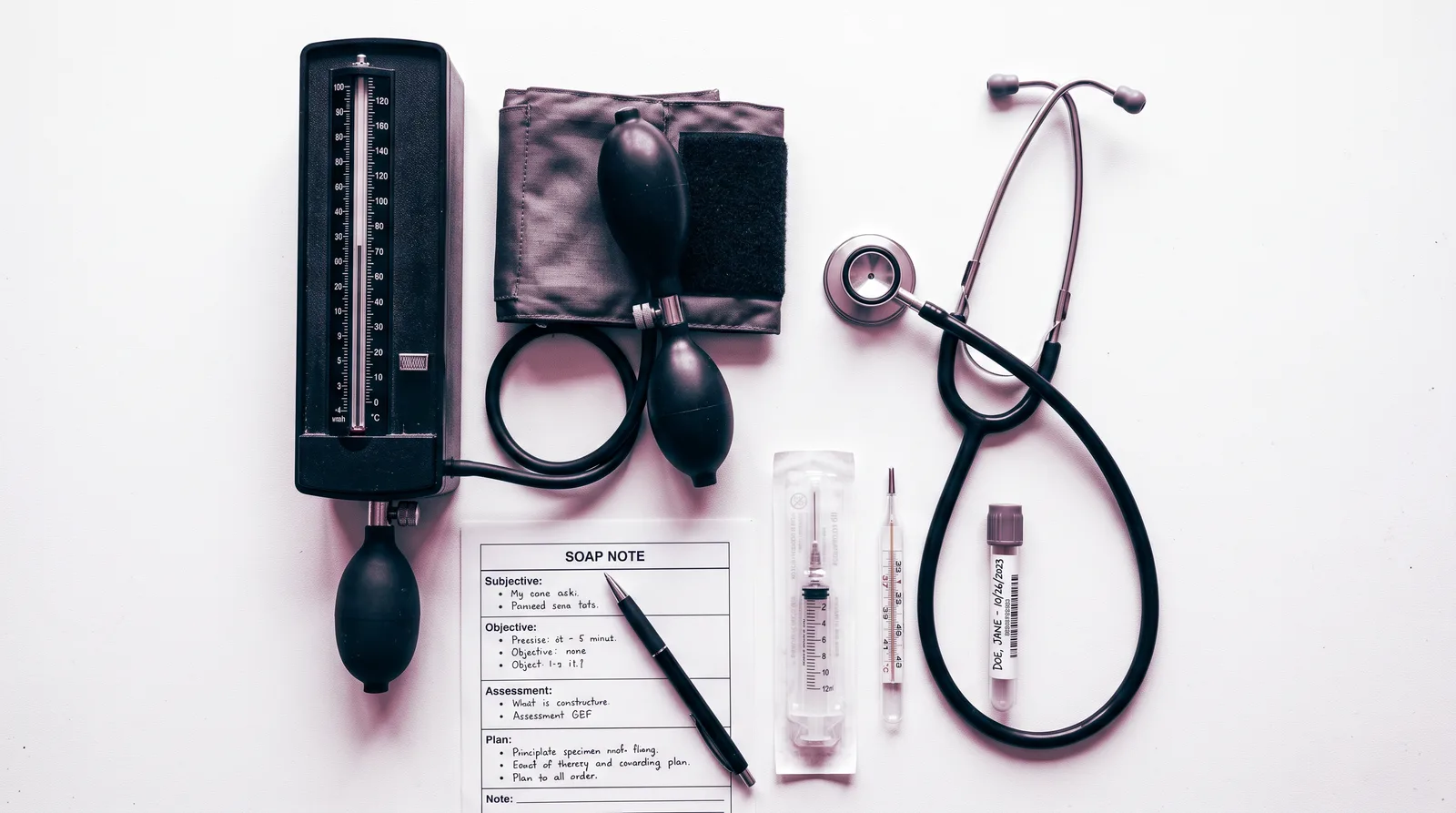
- Perform accurate vital signs measurements — blood pressure, pulse, respiration, and temperature — using standard clinical equipment
- Prepare and assist patients for routine physical examinations following proper positioning and draping protocols
- Execute basic phlebotomy and specimen collection procedures safely, applying infection control and OSHA standards
- Document patient intake information correctly in medical records using SOAP note format and common medical abbreviations
- Administer and calculate oral and injectable medications under supervision, applying the six rights of medication safety
- Navigate front-office duties including appointment scheduling, insurance verification, and medical billing fundamentals
How it works
A course that adapts to you
This isn't a set of static videos. Every lesson is generated live and tuned to where you actually are.
We learn your level
A quick placement check tailors your starting point so you're never bored or lost.
Lessons adapt as you go
Each lesson is written for your pace and your goal, adjusting as your skills grow.
Your AI coach keeps you moving
Checkpoints, feedback, and gentle nudges turn progress into a real result.
The curriculum
What's in your course
14 modules · 117 lessons

Foundations of Healthcare & the Medical Assistant Role
Establishes the professional, legal, and ethical framework every Medical Assistant must understand before entering a clinical setting.
- 1.1The Medical Assistant ProfessionIncluded
- 1.2Healthcare Law, Ethics & Patient RightsIncluded
- 1.3Medical Terminology & AbbreviationsIncluded
- 1.4Infection Control & OSHA StandardsIncluded
- 1.5Professionalism, Communication & Cultural CompetencyIncluded
- 1.6Scope of Practice & the Medical Assistant's ResponsibilitiesIncluded
- 1.7HIPAA, Confidentiality & Protected Health InformationIncluded
- 1.8Workplace Safety, Incident Reporting & Risk ManagementIncluded
Anatomy, Physiology & Medical Terminology
Provides students with the foundational knowledge needed to understand body systems, common diseases, diagnostic procedures, medications, and provider documentation.
- 2.1Introduction to Anatomy & PhysiologyIncluded
- 2.2Integumentary & Musculoskeletal SystemsIncluded
- 2.3Cardiovascular & Respiratory SystemsIncluded
- 2.4Digestive & Urinary SystemsIncluded
- 2.5Nervous System & Special SensesIncluded
- 2.6Endocrine & Reproductive SystemsIncluded
- 2.7Common Diseases, Disorders & Diagnostic TerminologyIncluded
Patient Intake & Clinical Documentation
Trains students to gather, record, and organize accurate patient information using professional documentation standards.
- 3.1The Patient Intake ProcessIncluded
- 3.2Obtaining the Chief Complaint & Health HistoryIncluded
- 3.3Medication Reconciliation & Allergy DocumentationIncluded
- 3.4SOAP Note Format & Medical RecordsIncluded
- 3.5Electronic Health Records (EHR) BasicsIncluded
- 3.6Medical Abbreviations in PracticeIncluded
- 3.7Documentation Errors, Corrections & Legal ConsiderationsIncluded
Vital Signs & Patient Assessment
Builds hands-on proficiency in measuring and accurately recording all standard vital signs using clinical equipment.
- 4.1Measuring Blood PressureIncluded
- 4.2Pulse & Respiration MeasurementIncluded
- 4.3Temperature Measurement MethodsIncluded
- 4.4Oxygen Saturation & Height/WeightIncluded
- 4.5Height, Weight & BMIIncluded
- 4.6Pain Assessment & Pain ScalesIncluded
- 4.7Documenting & Reporting Vital SignsIncluded
- 4.8Normal vs. Abnormal Vital SignsIncluded
Physical Examinations & Clinical Assisting
Prepares students to set up exam rooms, position and drape patients correctly, and assist providers during routine examinations.
- 5.1Exam Room Preparation & EquipmentIncluded
- 5.2Preparing the Patient for ExaminationIncluded
- 5.3Patient Positioning & Draping TechniquesIncluded
- 5.4Assisting with the Routine Physical ExamIncluded
- 5.5Specialty Exam ProceduresIncluded
- 5.6Pediatric & Geriatric Patient ConsiderationsIncluded
- 5.7Women’s Health & Reproductive Examination AssistanceIncluded
- 5.8Patient Education & Post-Visit InstructionsIncluded
Phlebotomy, Specimen Collection & Basic Procedures
Develops safe, technique-driven skills in venipuncture, capillary collection, and common clinical procedures under OSHA guidelines.
- 6.1Introduction to PhlebotomyIncluded
- 6.2Patient Identification & Preparing for CollectionIncluded
- 6.3Venipuncture Equipment & Needle SelectionIncluded
- 6.4Venipuncture FundamentalsIncluded
- 6.5Order of DrawIncluded
- 6.6Blood Collection Tubes, Additives & Common TestsIncluded
- 6.7Capillary Puncture & Fingerstick CollectionIncluded
- 6.8Difficult Draws, Complications & TroubleshootingIncluded
- 6.9Specimen Handling, Labeling & TransportIncluded
- 6.10Biohazard Disposal & Sharps SafetyIncluded
Laboratory & Specimen Collection Procedures
Introduces common waived testing and specimen collection procedures Medical Assistants may encounter in outpatient settings.
- 7.1Introduction to CLIA-Waived TestingIncluded
- 7.2Urinalysis FundamentalsIncluded
- 7.3Urine Specimen Collection MethodsIncluded
- 7.4Pregnancy TestingIncluded
- 7.5Glucose TestingIncluded
- 7.6Throat, Nasal & Other Swab CollectionsIncluded
- 7.7Stool, Sputum & Other Specimen CollectionsIncluded
- 7.8Quality Control & Preventing Specimen ErrorsIncluded
Medication Administration & Pharmacology Basics
Equips students to safely calculate, prepare, and administer oral and injectable medications using the six rights of medication safety.
- 8.1Pharmacology Fundamentals for MAsIncluded
- 8.2Drug Names, Classifications & Common MedicationsIncluded
- 8.3Medication Routes & Dosage FormsIncluded
- 8.4Medication Safety & Rights of AdministrationIncluded
- 8.5Reading Medication Labels & Provider OrdersIncluded
- 8.6Medication Calculations & Dosage MathIncluded
- 8.7Oral & Topical Medication AdministrationIncluded
- 8.8Injectable Medication Preparation & AdministrationIncluded
- 8.9Intradermal, Subcutaneous & Intramuscular InjectionsIncluded
- 8.10Documentation, Medication Errors & Adverse ReactionsIncluded
EKG & Cardiovascular Procedures
Introduces students to electrocardiography and the Medical Assistant's responsibilities when preparing patients and obtaining diagnostic tracings.
- 9.1Anatomy of the Heart & Cardiac ConductionIncluded
- 9.2Introduction to ElectrocardiographyIncluded
- 9.3EKG Equipment & Patient PreparationIncluded
- 9.4Lead Electrode PlacementIncluded
- 9.5Obtaining a Quality EKG TracingIncluded
- 9.6Identifying and Correcting EKG ArtifactsIncluded
- 9.7Basic Rhythm Recognition & When to Alert the ProviderIncluded
Minor Surgery, Wound Care & Clinical Procedures
Prepares students to assist with common outpatient procedures while maintaining aseptic technique and patient safety.
- 10.1Medical Asepsis vs. Surgical AsepsisIncluded
- 10.2Sterile Technique & Maintaining a Sterile FieldIncluded
- 10.3Preparing for Minor Surgical ProceduresIncluded
- 10.4Surgical Instruments & SuppliesIncluded
- 10.5Assisting During Minor ProceduresIncluded
- 10.6Basic Wound Care & Dressing ChangesIncluded
- 10.7Suture and Staple Removal FundamentalsIncluded
- 10.8Procedure Documentation & Patient AftercareIncluded
Emergencies & Patient Safety
Prepares Medical Assistant students to recognize urgent situations and appropriately activate the clinical office's emergency-response procedures
- 11.1Recognizing a Medical EmergencyIncluded
- 11.2Emergency Action Plans & the Medical Assistant’s RoleIncluded
- 11.3Syncope, Falls & SeizuresIncluded
- 11.4Allergic Reactions & AnaphylaxisIncluded
- 11.5Chest Pain, Stroke Warning Signs & Respiratory DistressIncluded
- 11.6Diabetic EmergenciesIncluded
- 11.7CPR/BLS & AED AwarenessIncluded
- 11.8Emergency Documentation & Incident ReportsIncluded
Front-Office Operations & Medical Billing
Covers the administrative competencies MAs need to manage scheduling, insurance verification, and basic medical billing workflows.
- 12.1Appointment Scheduling & Patient FlowIncluded
- 12.2Telephone Etiquette & Patient CommunicationIncluded
- 12.3Referrals & Prior AuthorizationsIncluded
- 12.4Insurance Verification & EligibilityIncluded
- 12.5Medical Coding Basics: CPT & ICD-10Included
- 12.6Medical Coding Basics: CPT & HCPCSIncluded
- 12.7Claims Submission & Billing FundamentalsIncluded
- 12.8Copays, Deductibles & Patient ResponsibilityIncluded
- 12.9Denials, Rejections & Basic Follow-UpIncluded
Patient Education & Special Populations
Builds the communication skills needed to support patients from different backgrounds and across different stages of life.
- 13.1Patient Education & Health LiteracyIncluded
- 13.2Communicating with Pediatric Patients & ParentsIncluded
- 13.3Caring for Older AdultsIncluded
- 13.4Patients with Disabilities & Accessibility NeedsIncluded
- 13.5Language Barriers & Interpreter ServicesIncluded
- 13.6Difficult Conversations & De-EscalationIncluded
- 13.7Social Determinants of Health & Barriers to CareIncluded
Certification Preparation & Career Launch
Brings the entire program together while preparing students for certification testing and entry-level Clinical Medical Assistant employment.
- 14.1Clinical Medical Assistant Comprehensive ReviewIncluded
- 14.2Medical Terminology & Anatomy ReviewIncluded
- 14.3Clinical Procedures ReviewIncluded
- 14.4Phlebotomy & Laboratory ReviewIncluded
- 14.5Pharmacology & Medication ReviewIncluded
- 14.6EKG ReviewIncluded
- 14.7Administrative & Billing ReviewIncluded
- 14.8Certification Exam Strategies & Timed PracticeIncluded
- 14.9Clinical Medical Assistant Mock ExamIncluded
- 14.10Building a Medical Assistant RésuméIncluded
- 14.11Medical Assistant Interview PreparationIncluded
- 14.12Your First 90 Days as a Medical AssistantIncluded
Who it's for
Is this you?

Recent high school grads
She wants a real healthcare career fast — this gives her the clinical and administrative foundation to get hired without a four-year degree.

Career changers
He's leaving a non-healthcare field and needs a structured, beginner-friendly program that builds genuine clinical credibility from scratch.

Aspiring first-generation healthcare workers
She's the first in her family pursuing a clinical role and needs plain-language instruction that demystifies medical terminology and builds real confidence.

Certified Nursing Assistant (CNA) step-ups
He already has patient-care basics and wants to expand his scope — especially on the administrative and phlebotomy side — to qualify for MA roles.

Medical billing beginners
She's been handling front-desk work and wants to round out her skills with clinical knowledge so she can move into a full Medical Assistant position.

Returning-to-work adults
She stepped away from the workforce and is re-entering through healthcare — this program's step-by-step structure lets her build skills at her own pace.
Questions
Frequently asked
Online Learning
A note from LLH School of Phlebotomy & Healthcare Technicians
LLH Online Learning
If you've been thinking about a healthcare career but don't know where to begin — or you've looked at the job listings, seen "clinical experience required," and felt the door slam in your face — I want you to know something: everyone in a clinical setting started exactly where you are right now. Zero experience. A lot of questions. And a real desire to do work that matters.
I built this program because the path into healthcare shouldn't be a mystery. Medical Assisting is one of the best entry points the field has — it's hands-on, it's in demand, and it puts you in the room where real patient care happens. But most beginner resources either overwhelm you with jargon from page one, or they skim over the clinical skills so lightly that you finish without any real confidence. I wanted to do something different.
This program teaches you every skill a working Medical Assistant actually uses — vital signs, phlebotomy, medication administration, physical exam assistance, SOAP note documentation, EHR basics, insurance verification, medical billing — and it teaches them in order, step by step, the way a great mentor on the job would. We start with the foundations: healthcare law, patient rights, infection control, OSHA standards, medical terminology. We build from there. By the time you're prepping a venipuncture site or calculating a medication dose, you already understand why every safety step exists.
Here's the thing I want to be honest about: this isn't a shortcut. Real competence takes real learning. What I've tried to do is make that learning as clear, direct, and motivating as possible — so the hours you put in actually stick, and you show up to your first day on the job (or your certification exam) knowing you're prepared. Not hoping. Knowing.
If you're ready to take healthcare seriously and build a skill set that employers recognize from day one, I'm ready to teach it to you. Let's get started.
— LLH Online Learning
Start your journey today
Get instant access — learn at your own pace with an AI coach in your corner.
$99/mo
Recurring billing · cancel anytime
Secure checkout · Instant access
- 14 modules, 117 lessons
- AI-adaptive lessons tuned to your level
- Quizzes & checkpoints to lock in progress
- Your own AI learning coach
- Learn on any device, at your pace
- Full access for as long as you're subscribed